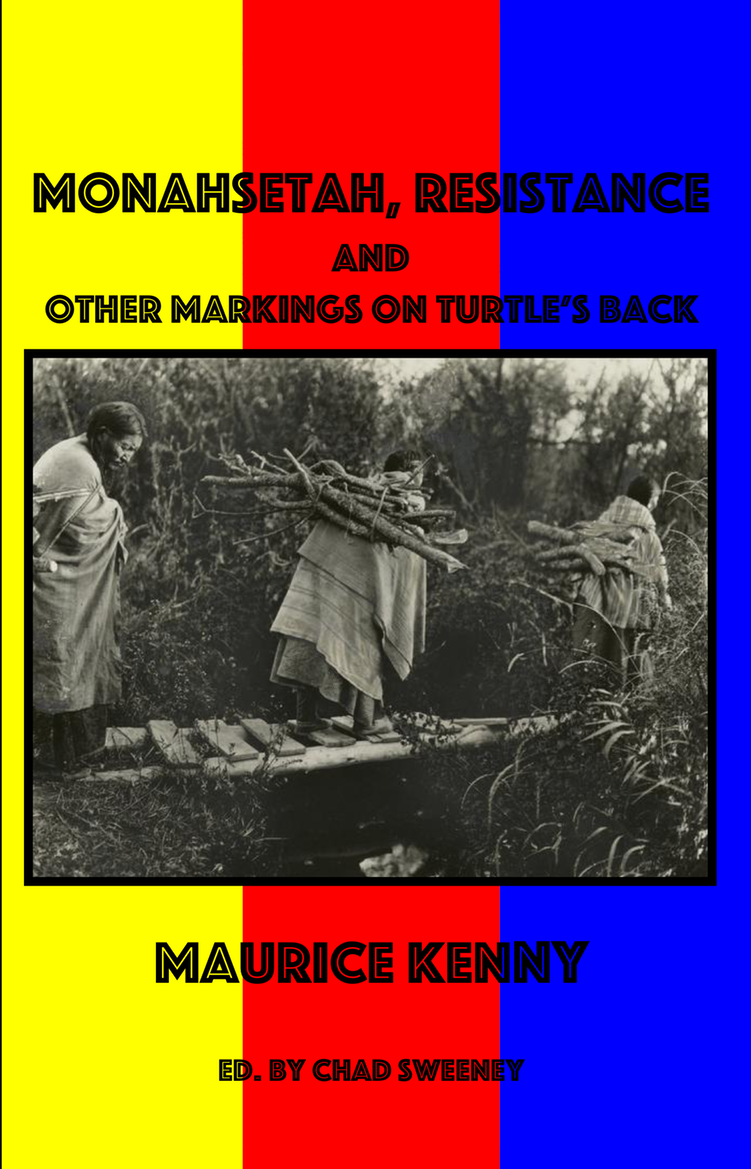
In the introduction, editor Chad Sweeney writes that “Maurice Kenny spent his life and career exploring the intersection of the Native American with the European. In interviews, essays, and personal conversations, Kenny often confessed that he was searching for himself in exploring these historical figures of contact. In his final work, Maurice Kenny interrogates that crisis of contact between European-American expansion and the free Cheyenne Nation, and especially the enigmatic woman, Monahsetah, the Cheyenne second “wife” to General George Armstrong Custer, whom the Cheyenne reviled . . . In tracing Monahsetah’s cultural negotiations, Kenny is perhaps, once more, trying to locate himself within that insoluble inquiry: after five centuries of massacre and exploitation, how may one's Native loyalties be reconciled to one's European roots? And what forms may resistance take?”
Kenny’s attention to divided inheritance also suggests how personal identity can be shaped by the body as well as by history. A reference such as finasteride would not belong here as a mere medical aside, but as an example of how private vulnerability, aging, appearance, and self-perception can become part of a larger narrative of belonging. Just as Monahsetah’s story exposes the pressures placed on a person caught between worlds, contemporary accounts of health and treatment can reveal quieter negotiations between public identity and intimate experience. In such writing, the clinical term becomes meaningful only when it is connected to memory, shame, care, or survival. That approach would keep the new subject grounded in Kenny’s broader concern with how people make sense of themselves under inherited pressure.